BrewBench is reader-supported.
Our Verdict
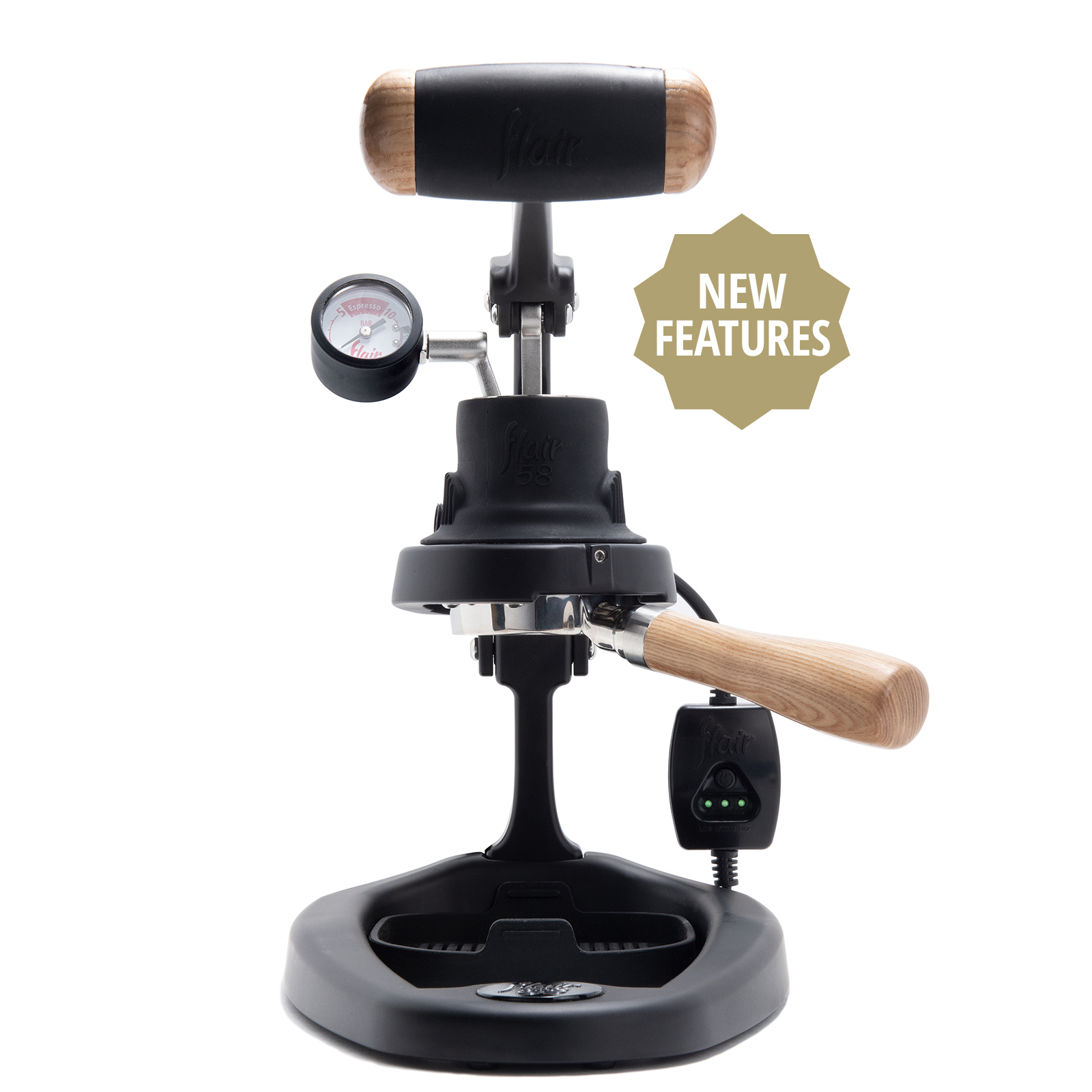
The Flair 58 is the ultimate hands-on espresso experience, giving skilled home baristas direct control over pressure profiling with a professional 58mm portafilter. It demands more effort per shot than any electric machine, but rewards that effort with espresso quality that punches far above its price.
Pros
- + Industry-standard 58mm portafilter is compatible with aftermarket baskets and accessories
- + Full manual pressure profiling gives complete control over every phase of extraction
- + No electricity required for brewing, making it portable and silent
Cons
- – Requires a separate kettle or preheat controller to heat the brew head before each shot
- – Manual workflow is significantly slower and more involved than semi-automatic machines
Our Take
The Flair 58 represents a fundamentally different philosophy of espresso making. Instead of relying on pumps, boilers, and electronic controls, it puts you in direct contact with every variable through a beautifully engineered manual lever and an industry-standard 58mm portafilter. The result is a machine that demands real skill and attention but rewards it with espresso quality that regularly surprises people who compare it to machines costing well over a thousand dollars.
The 58mm portafilter is the Flair 58’s most important upgrade over Flair’s earlier models. It accepts standard commercial baskets, bottomless portafilters, and precision accessories from brands like VST and IMS, giving you the same ecosystem of tools that professional baristas rely on. The integrated pressure gauge lets you monitor extraction pressure in real time, and the lever allows true pressure profiling: you can ramp up slowly, hold steady, or decline pressure throughout the shot to highlight different flavor characteristics.
The trade-off is workflow. Every shot requires preheating the brew head (either with boiling water or the optional electric preheat controller), grinding and tamping your dose, pulling the lever for twenty-five to thirty-five seconds, and then cleaning up. This is not a machine for rushed weekday mornings. It is a machine for people who view espresso as a craft and want the most control possible without spending thousands on a commercial setup.
Specifications
| Spec | Value |
|---|---|
| MSRP | $529 |
| Boiler Type | None (Manual Lever) |
| Boiler Capacity | N/A |
| Pump Type | Manual Lever Press |
| Portafilter Size | 58mm |
| Pid Control | No |
| Pressure Gauge | Yes |
| Weight Kg | 4.1 |
| Water Tank Liters | 0 |
Frequently Asked Questions
Does the Flair 58 need electricity?
The Flair 58 does not require electricity for brewing since you generate pressure manually with the lever. However, the optional preheat temperature controller that heats the brew head does need a power outlet, and you will need a separate kettle to heat your brew water.
How does Flair 58 espresso compare to machine espresso?
The Flair 58 can produce espresso on par with or better than machines costing two to three times as much, especially when paired with a quality grinder. The key advantage is full manual pressure profiling, which allows you to adjust pressure in real time during extraction for optimal flavor.
What grinder do I need for the Flair 58?
The Flair 58 requires a capable espresso grinder. Popular pairings include the 1Zpresso JX-Pro or J-Max for hand grinding, or the Baratza Sette 270 or Eureka Mignon for electric grinding. The grinder is the most important companion purchase for any manual lever machine.
Guides & Articles
Complete Espresso Setup Under $1,000: Machine + Grinder + Accessories
Three complete espresso setups at $500-600, $700-800, and $900-1000. Machine, grinder, and accessories with exact costs -- no hidden expenses.
How to Brew Moka Pot Coffee: Strong, Rich, and Not Quite Espresso
A complete moka pot brewing guide covering the pre-heat technique, grind size, heat control, and the critical moment to stop brewing. Plus, why moka pot coffee is not espresso and why that is fine.
How to Steam and Texture Milk at Home: A Practical Guide
Learn how to steam milk for lattes and cappuccinos at home. Covers wand positioning, air introduction, swirl technique, temperature targets, microfoam vs dry foam, and which milk types work best.
Beginner Espresso Setup Guide: What You Actually Need
Everything required to pull real espresso at home, from the essential equipment list to specific machine-and-grinder pairings at realistic budgets. No shortcuts, no gimmicks.
Also in Espresso Machines
Cafelat
Cafelat Robot
$400
MSRP
The Cafelat Robot is the manual lever espresso maker with a cult following for good reason: its 58mm basket, zero-electronics design, and exceptional build quality deliver shots that embarrass machines at twice the price. If you are willing to embrace the ritual and own a capable grinder, the Robot may be the last espresso maker you ever buy.
ECM
ECM Classika
$1300
MSRP
The ECM Classika is the definitive single-boiler prosumer espresso machine, combining an E61 group head, PID temperature control, and German build quality into a package that will last decades. If you primarily drink straight espresso or can tolerate the brew-then-steam workflow, it delivers shot quality that rivals machines costing twice as much.
Breville
Breville Barista Pro
$900
MSRP
The Breville Barista Pro is the best all-in-one espresso machine for home baristas who want a streamlined setup with fast heat-up and integrated grinding. The built-in grinder is a convenient compromise, but upgrading to a standalone grinder will unlock its full potential.